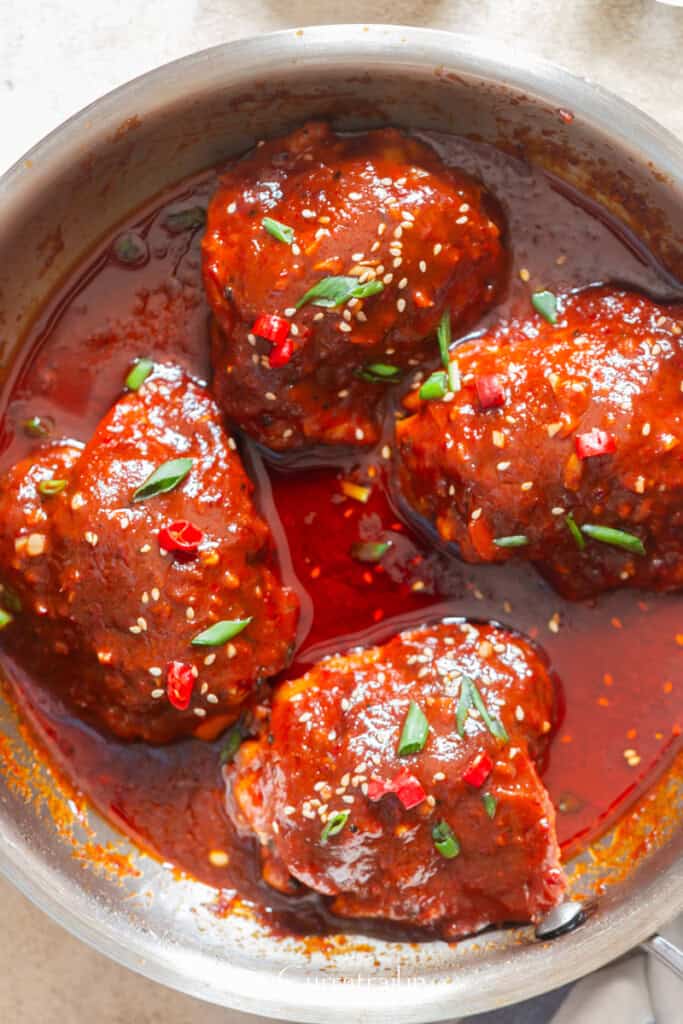
This Korean-inspired Gochujang Chicken has spicy-sweet, smoky flavours. Juicy, tender chicken thighs are glazed with sweet, spicy, smoky, savoury sauce. It’s easy to make and perfect for a busy weekday dinner.
If you love spicy chicken, try this spicy sweet firecracker chicken recipe.
Jump to:
Why You’ll Love This Recipe
- Simple and easy to make.
- 20 minutes – Serve dinner in 30 minutes with this unique spicy gochujang chicken.
- Umami flavours – Gochujang, aka fermented Korean chilli paste, adds punchy and complex flavours.
- Comfort food – serve it with jasmine rice, or steamed white rice with spicy Korean cucumber salad on the side.
Ingredients
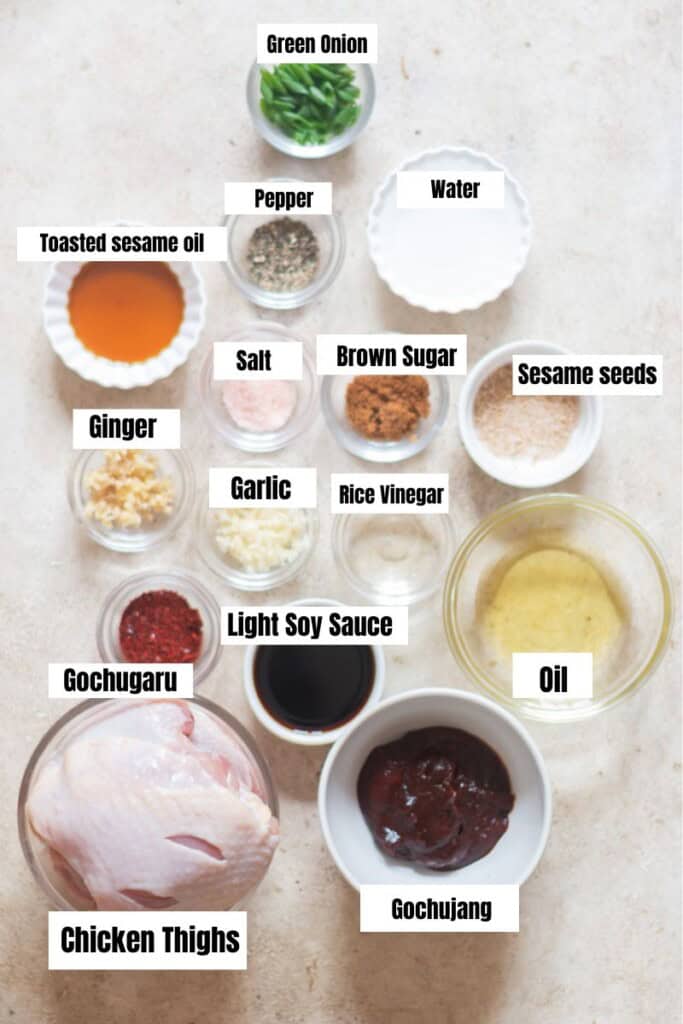
Chicken – for juicy, tender use chicken thighs with skin and bone. Thighs with bone will take slightly longer to cook. Feel free to use boneless chicken thighs. You can substitute thighs with boneless chicken breasts.
Gochujang (Fermented Korean Chilli Paste) – There is no substitute for this. The heat levels of Gochujang paste vary by brand. Taste first and then adjust the amount.
Gochugaru (Korean red chilli flakes) – Gochugaru is the Korean version of red pepper flakes. It’s not the same as regular red chilli flakes. It has a spicy, slightly sweet and earthy flavour, making the dish vibrant red.
Soy sauce – Use light, regular, or low-sodium; any will work.
Rice vinegar – vinegar adds bright, crisp flavours to the salad, giving it a tangy taste. Helps balance some of the heat from gochujang.
Garlic & Ginger – Use fresh minced ginger and garlic for the best flavours.
Brown Sugar – for sweetness to balance the spicy flavours.
Oil – Use any neutral oil. Canola oil, vegetable oil, sunflower oil, and grapeseed oil will work.
Toasted Sesame oil – for toasty flavour.
Salt & Pepper to season the chicken.
For Garnish – Green onion, white sesame seeds.
Step-By-Step Instructions
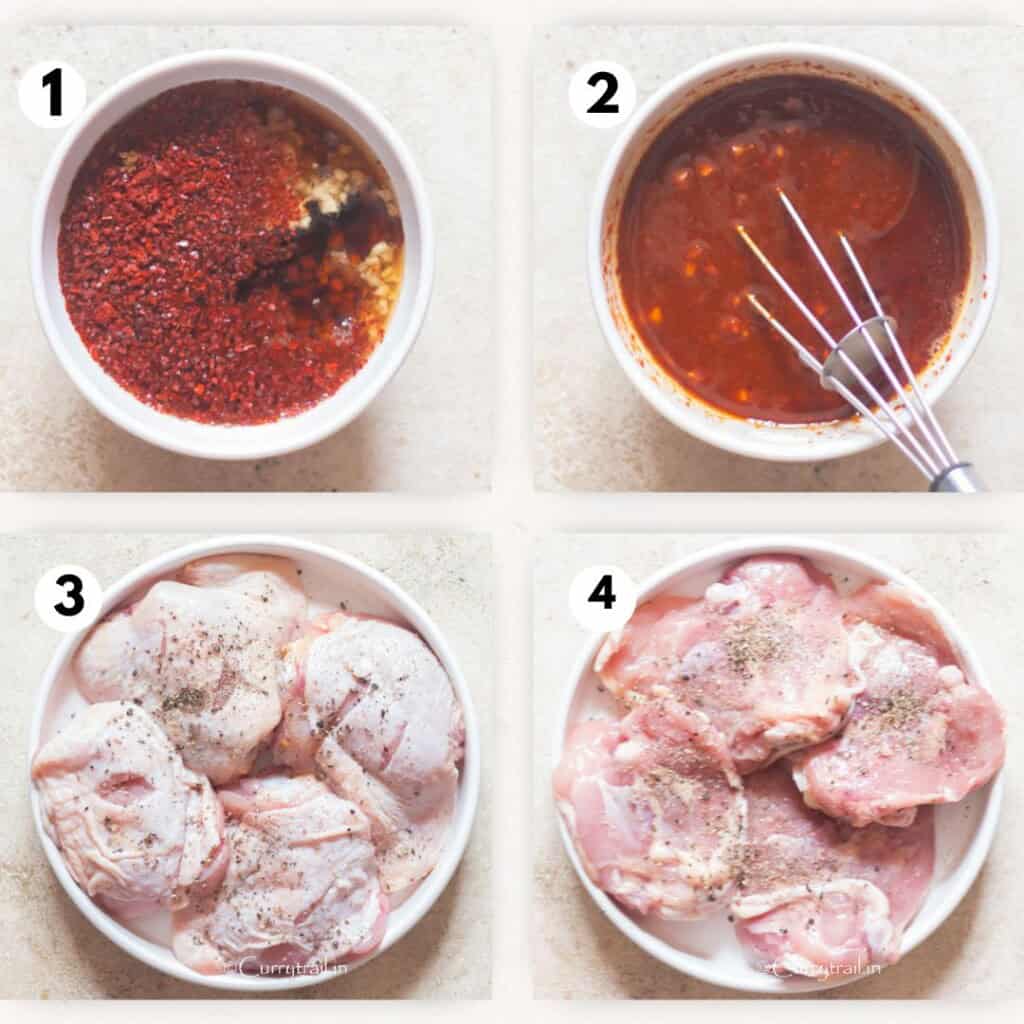
Step 1 & Step 2: First, make the sauce – mix gochujang paste, gochugaru, rice vinegar, soy sauce, minced garlic, minced ginger, brown sugar, toasted sesame oil, and water. Whisk well and keep aside.
Step 3 & Step 4: Please chicken on a plate. Sprinkle salt and pepper on both sides, rub to season evenly.
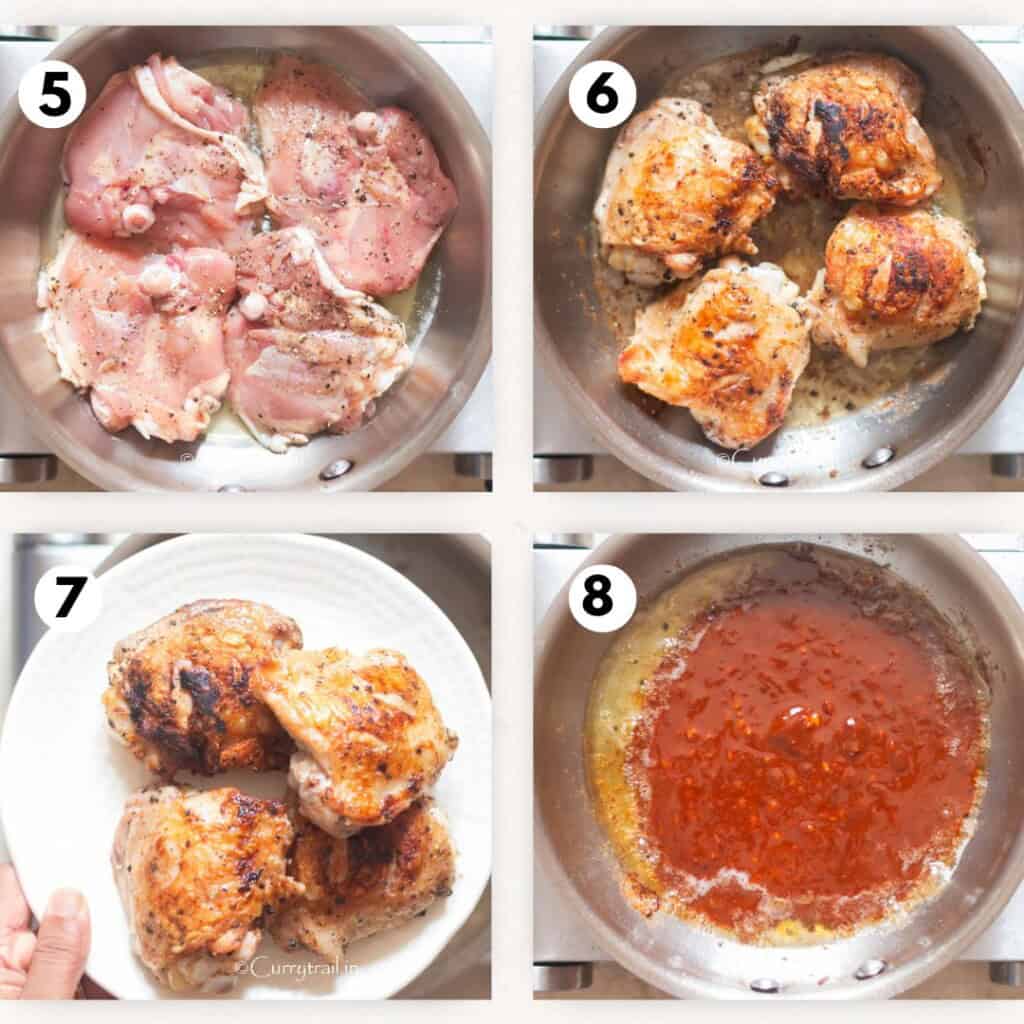
Step 5: Heat canola oil in a large skillet. Place the chicken thigh skin side down. Cook on medium heat for 12-15 minutes. Do not move the chicken; let it sear the skin side properly until golden brown.
Step 6: Flip the chicken and cook on the other side for 5-6 minutes.
Step 7: Check the temperature of the chicken in the middle using a cooking thermometer. When the internal temperature reads 165F, the chicken is cooked through.
Remove chicken from the pan and transfer it to a plate. Set it aside.
Step 8: Into the same pan, pour the prepared sauce. Reduce the heat to low.
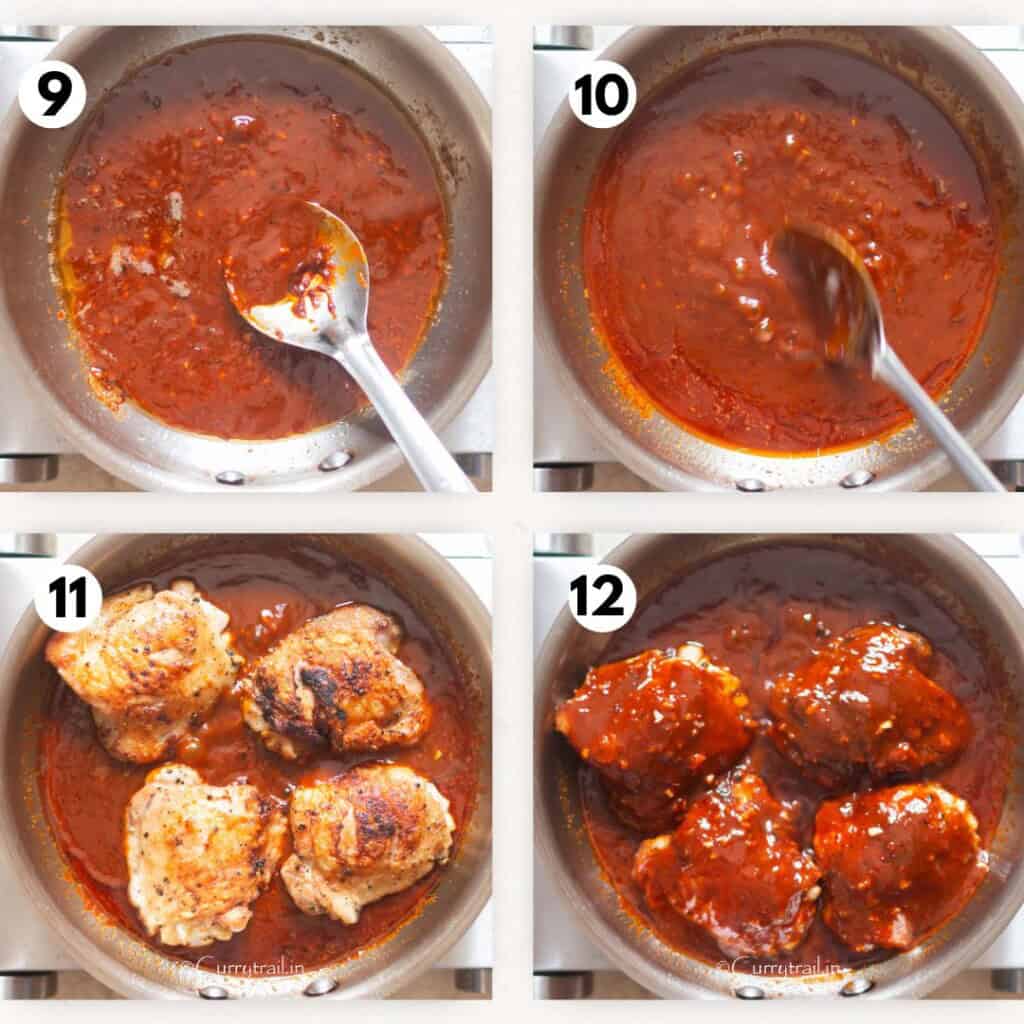
Step 9: Simmer and cook the sauce for 5-7 minutes.
Step 10: If the sauce turns very thick, adjust the consistency by adding 1 tablespoon of water.
Step 11: Place chicken thighs back in the pan. Pour the sauce over the chicken. Let it simmer for 2 minutes.
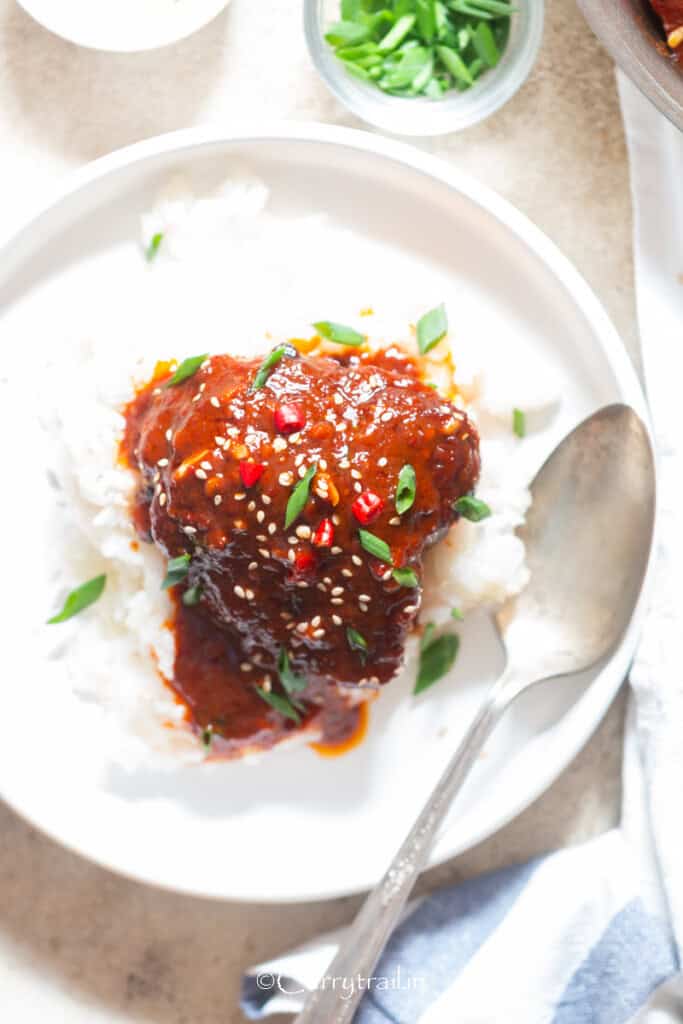
Step 12: Serve chicken with sauce over steamed rice, jasmine rice or sushi rice with spicy cucumber salad on the side.
Recipe Tips
- Do not move the chicken for 12-15 minutes while cooking on the skin side; this allows the chicken skin to turn golden brown.
- Feel free to add any favourite vegetables of your choice.
- Adjust the spice levels depending on your taste. If you like it spicier, select the hot gochujang brand. Add an extra tablespoon of gochujang paste while making gochujang sauce or add a couple of teaspoons of gochugaru (Korean red pepper flakes) for a spicier kick.
Storage
Any leftovers can be stored in an air-tight container in the refrigerator. Pour the leftover sauce over the chicken; this helps keep the chicken moist.
To reheat on the stove top, place the chicken with sauce in a pan and reheat on medium-low heat until hot. If the sauce turns thick, adjust the consistency by adding a tablespoon of water. You may also reheat in a microwave using a microwave-safe bowl. Serve hot over sushi rice or noodles.
Don’t forget to Subscribe to CurryTrail Recipes below to get our newest recipes delivered straight to your inbox.
If you love this recipe, keep in touch, and don’t miss out on any of Currytrail’s recipes. Follow me on Pinterest, Facebook, and Instagram.
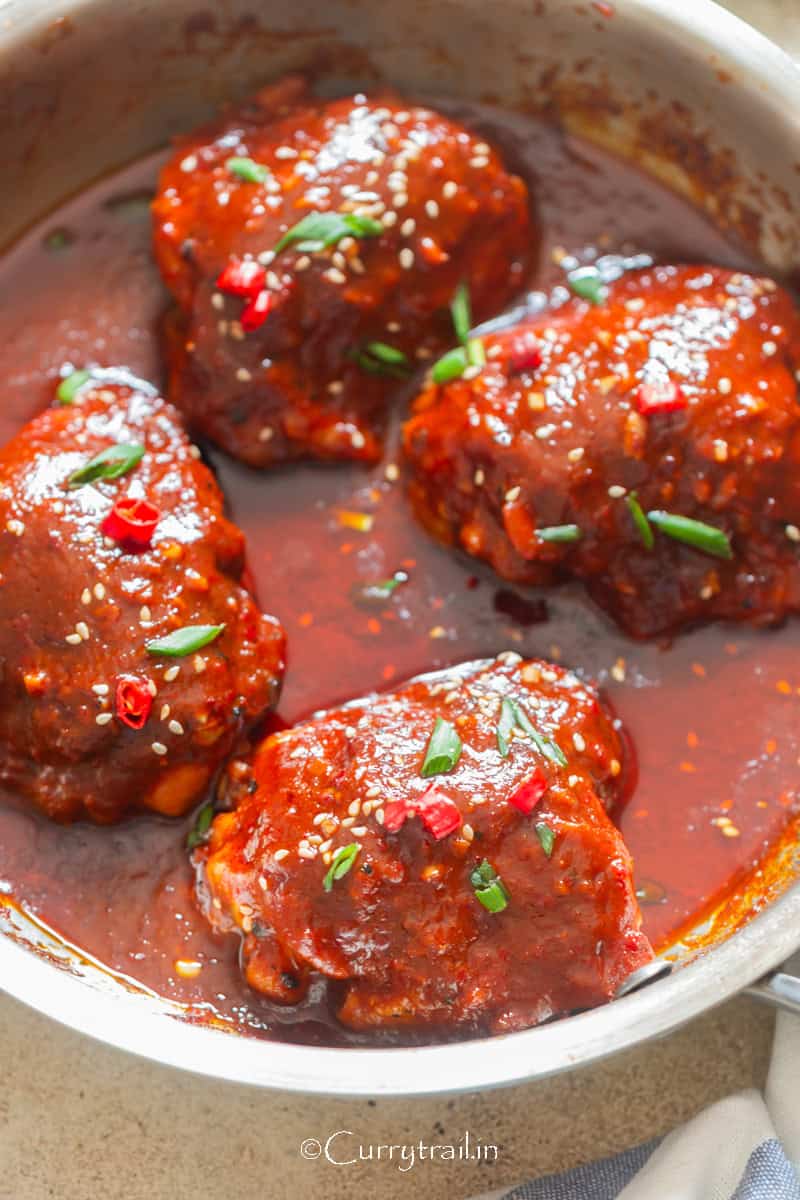
📋One Pan Spicy Gochujang Chicken
Ingredients
- 8 bone-in skin-on chicken thighs
- ¼ cup gochujang paste
- 2 tablespoons light soy sauce
- 2 tablespoons rice vinegar
- 1 tablespoon gochugaru Korean red chilli flakes
- 2 tablespoons brown sugar
- 3 cloves garlic minced
- 1 tablespoon ginger minced
- 2 tablespoons water
- 2 teaspoons toasted sesame oil
- 2 tablespoons canola oil
- Green onion for garnish
- White sesame seeds for garnish
Instructions
- First, make the sauce – mix gochujang paste, gochugaru, rice vinegar, soy sauce, minced garlic, minced ginger, brown sugar, toasted sesame oil, and water. Whisk well and keep aside.
- Please chicken on a plate. Sprinkle salt and pepper on both sides, rub to season evenly.
- Heat canola oil in a large skillet. Place the chicken thigh skin side down. Cook on medium heat for 12-15 minutes. Do not move the chicken, let it sear the skin side properly until golden brown.
- Flip the chicken and cook on the other side for 5-6 minutes.
- Check the temperature of the chicken in the middle using a cooking thermometer. When the internal temperature reads 165F, the chicken is cooked through.
- Remove chicken from the pan and transfer it to a plate. Set it aside.
- Into the same pan, pour the prepared sauce. Reduce the heat to low.
- Simmer and cook the sauce for 5-7 minutes.
- If the sauce turns very thick, adjust the consistency by adding 1 tablespoon of water.
- Place chicken thighs back in the pan. Pour the sauce over the chicken. Let it simmer for 2 minutes.
- Serve chicken with sauce over steamed rice, jasmine rice or sushi rice with smashed cucumber salad on the side.
Video
Notes
- Do not move the chicken for 12-15 minutes while cooking on the skin side; this allows the chicken skin to turn golden brown.
- Feel free to add any favourite vegetables of your choice.
- Adjust the spice levels depending on your taste. If you like it spicier, select the hot gochujang brand. Add an extra tablespoon of gochujang paste while making gochujang sauce or add a couple of teaspoons of gochugaru (Korean red pepper flakes) for a spicier kick.
Nutrition
Created by Jyothi Rajesh
Thank you for stopping by.
I’m Jyothi Rajesh (Jo for short) and I’m the founder of the food blog, Curry Trail where I share my culinary Adventures. I live in Bangalore, India. I’m a mom of two beautiful kids. My passion is creating and sharing delicious and easy recipes for the home cook. I have been blogging since 2014 and many of my recipes have appeared in both online and print publications over the years. Learn more about Jyothi Rajesh.








Leave A Reply!